“Cora,” Aleppo Pine
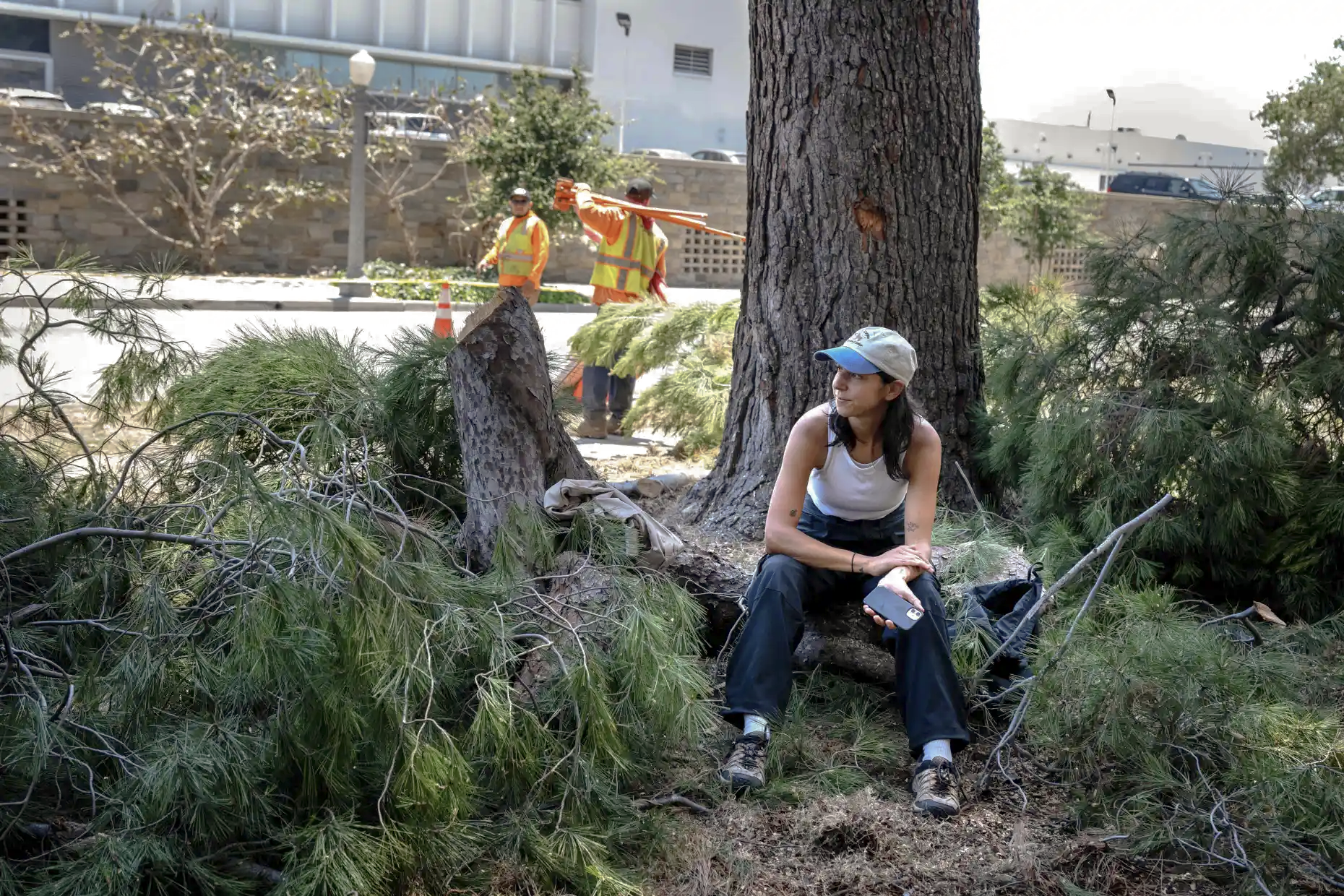
Fat droplets of sap drip onto my shoulder, my wrist, my calf. I’m sitting under what remains of the towering canopy of a heritage Aleppo Pine, sap raining down from severed limbs hundreds of feet in the air. The chainsaws have stopped, but both the tree and I are vibrating with shock.
I sit down on a sticky, gnarled limb that’s been cut in seven places, falling heavy into the duff. The branches fused together somewhere over the last several decades, growing into a single twisted mass that’s surely offered respite for tired wings, shelter for nests and small fuzzy mammals, and puzzle-piece bark for all manner of web-spinning and burrowing invertebrates. A whole world existed far up in these branches, secluded from human view but humming with life. In just minutes, seven cuts sent the branch tumbling to the ground. But trees never stop giving, and in this moment she offers me a perfect triangular seat to rest and catch my breath.
Slowly, the men with chainsaws begin to move away, muttering and shrugging, contemplating an early lunch break. I nestle into the fragrant nook as the warm resin stains my clothes and my skin, the tree’s wounds bleeding onto me. Despite the severity of the cuts, this tree can probably survive, with proper tending and maintenance. For now, we’ll sit in peaceful silence together, taking care of one another.
—Nina Raj
About Aleppo Pines
Pinus halepensis
Aleppo pine is native to the Mediterranean region, and is often grown there for timber and other wood products. In North America, it is widely planted in parks and landscapes as an ornamental in similar hot climates with seasonal rain such as Arizona and Southern California. In Greece, the resin from Aleppo pine has been used for more than 2,000 years to seal and flavor wine known as retsina. The Aleppo pine has slender, light green needles in fascicles of two or, very rarely, three.
Who else relies on Cora?
A Common Raven’s nest was found in Cora at the time of attempted removal, resulting in her name. CoRa is the biologists’ shorthand for Common Raven.
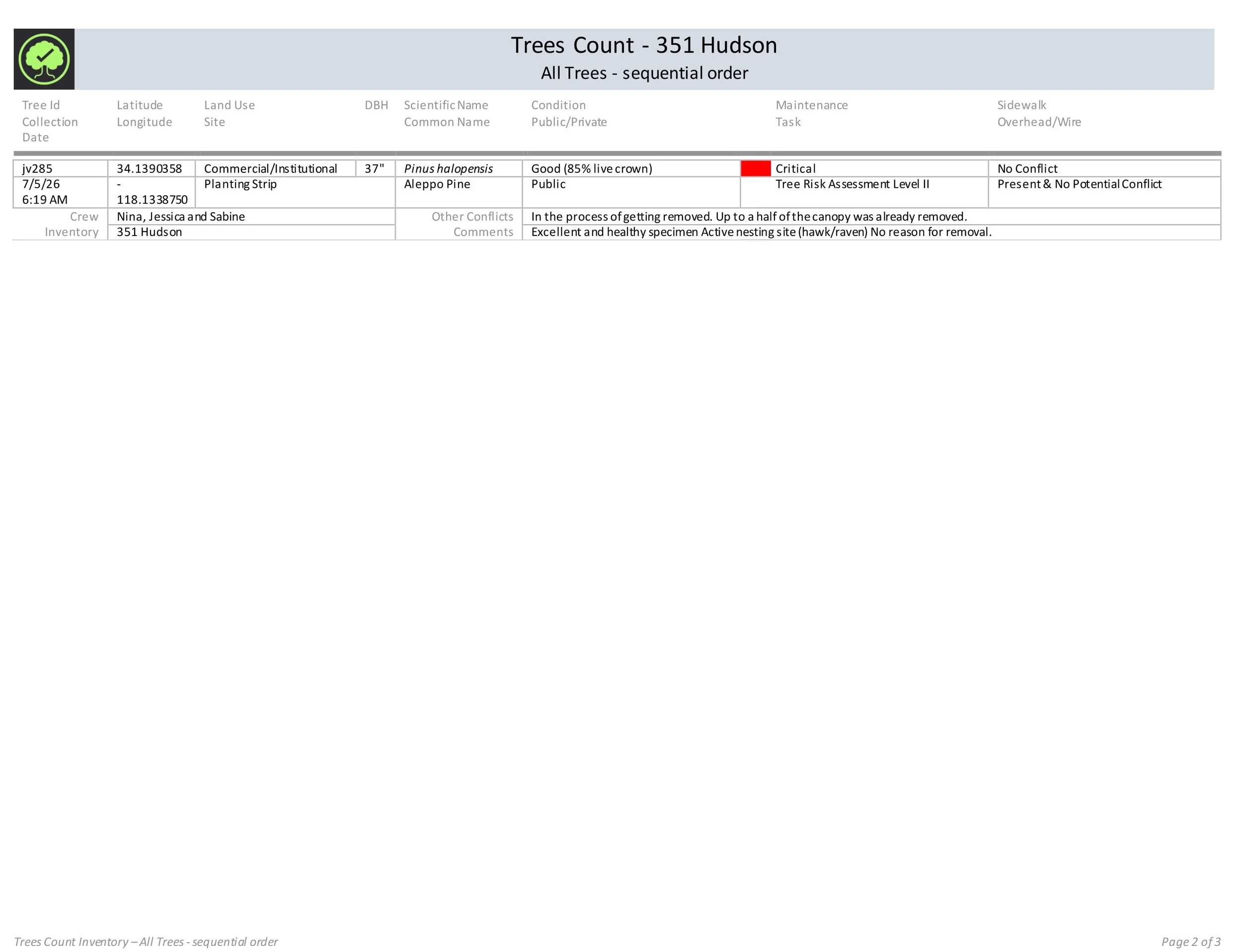
View the arborist report