“Kinaya,” Western Sycamore
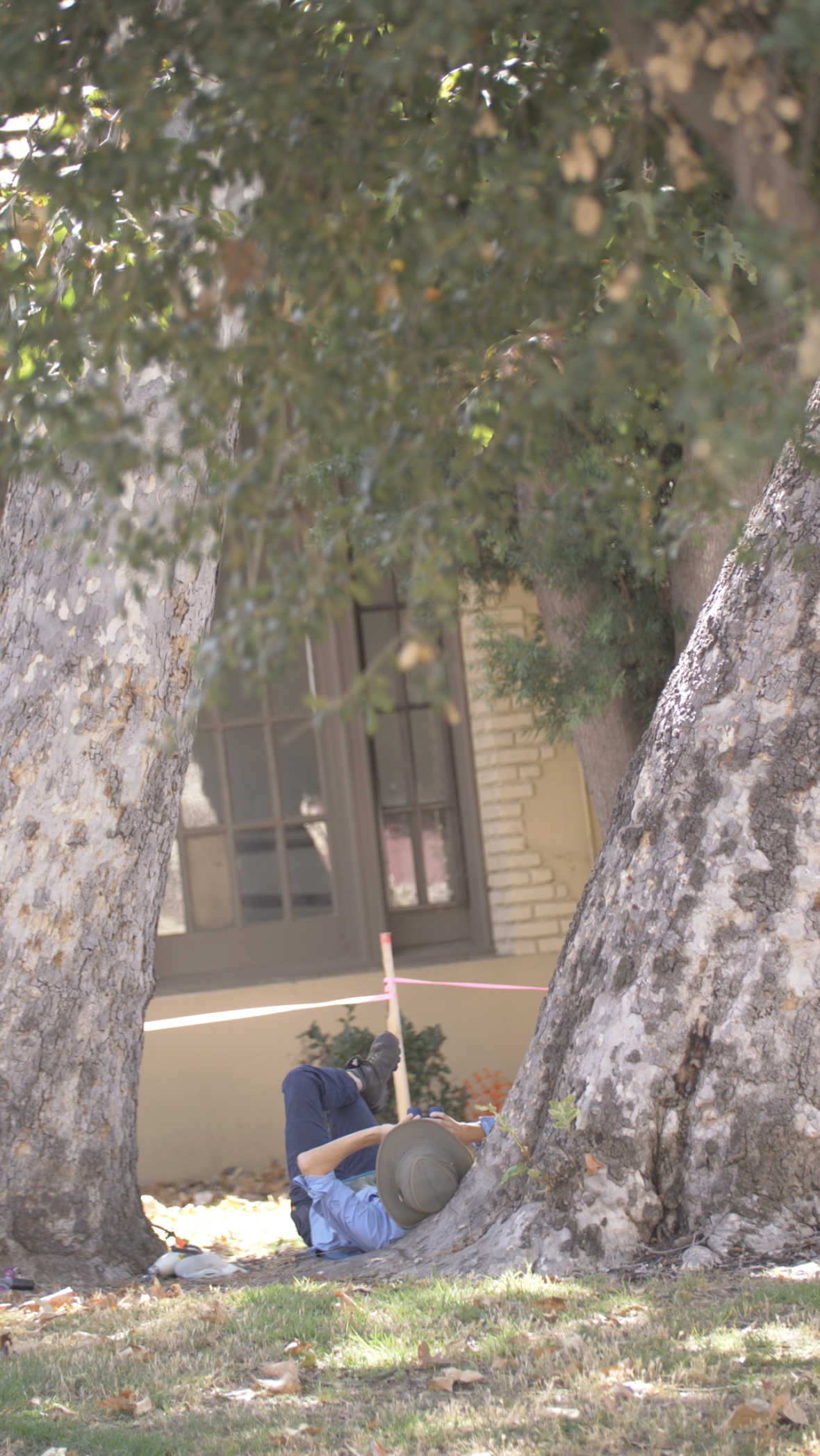
The twin sycamores you see before you were most likely planted in 1874 when the Administration Building at this address was completed. It's a fair estimate that the seeds which resulted in these trees germinated in a nursery around 1860, making the trees around 166 years old. The two young trees grafted their root systems together and each tree formed one half of the canopy. Together they grew into one massive organism. Years ago a perceptive groundskeeper noticed their unique structural arrangement and made a case to have them cabled together to stabilize them. The cost and labor for this tree preserving procedure was approved and testifies to the fact that our trees were valued as an important asset to the property and to the community.
Just to give you some perspective on the age of the twin trees: they were alive and growing when the Pasadena Playhouse opened in 1870, when the first Rose Parade was held in 1890, when CalTech opened its doors in 1891, and when the first game was played at the Rose Bowl in 1922. The trees witnessed and survived 5 major earthquakes, the terrible air pollution of the 1970s, and the hurricane force winds of the night of January 7th, 2025. Rather than chainsaws these trees truly deserve Landmark Status. The next time you see a towering sycamore in a paved-over city landscape you may take delight and comfort in the knowledge that there is an underground stream present, and should you see our impressive Western Swallowtail Butterfly sail by, you will surely also find a sycamore nearby; those two are forever interlinked.
—Sabine Hoppner
About Western Sycamores
Platanus racemosa
The Western Sycamore (Platanus racemosa), a species of plane tree native to California, is a tall, distinctive tree that stands out in any landscape. This tree is known for its bark, which is mottled in shades of pale tan, gray, and white. The bark peels as it ages. It has twisting branches and large leaves which turn orange-yellow in the fall. It produces seed balls after blooming. It's an important host plant for the Western Tiger Swallowtail butterfly.
Naturally found in moist areas near rivers and streams, this tree requires a significant amount of water to thrive. When not planted near a water source, it needs regular irrigation. The Western Sycamore tolerates different soil types and does best in full sun. It can grow up to 100 feet tall and 50 feet wide, so be sure to give new trees a large planting area.
Who else relies on Kinaya?
Western Tiger Swallowtail, Ceanothus Borer Moth, Sycamore Borer Moth, Squirrels, Polyphemus moth, Raccoons, Titmouses, Owls.
View the arborist report